
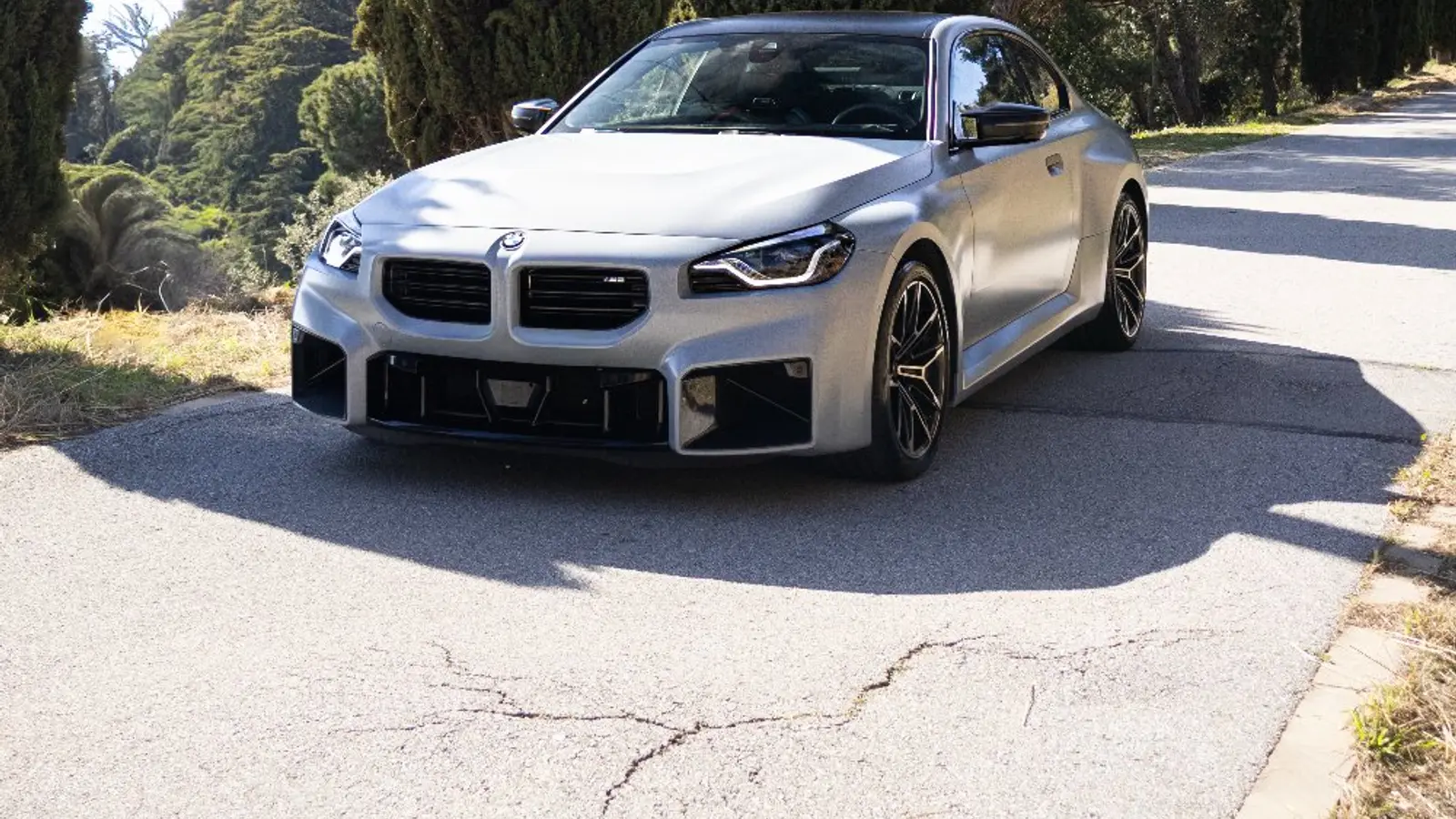
What PPF (paint protection film) costs depends on how much of the car you cover, which film you put on it, the size of the vehicle and the hours of preparation. At SERRES Wrap Center in Boca Raton, paint protection film is from $1,000, and every coverage level is published twice: once in Essential film and once in Signature film. Full Front, the level most cars leave with, costs $1,900 in Essential and $2,150 in Signature. This guide breaks down the four coverage levels, the two film tiers, what pushes a quote up, and how to work out whether it pays off on a car that lives between I-95 and the ocean.
What PPF is and why its price varies so much
PPF is a clear thermoplastic polyurethane (TPU) film applied over the paint. It absorbs stone chips, parking scuffs and wash scratches, and it takes the chemical hits that South Florida throws at a car all year: love-bug residue in May and September, bird droppings, tree sap and the mineral spots left behind by sprinklers and hard water. The films we install are self-healing, so micro-scratches close up with heat, and a hood parked on Glades Rd in August supplies that heat every afternoon.
The price varies so much because there is no single PPF. Four variables move it: the surface covered, the film tier, the size of the car and the hours of preparation. A partial front end on a compact and a full body on a three-row SUV are different jobs, with different material counts and different studio times. That is why two quotes for the same three letters can be so far apart.
PPF cost by coverage: four levels, two film tiers
This is the quick reference. Every level is priced in both films, so the coverage decision and the film decision stay separate. The same numbers sit on our pricing page and on the PPF service page; every car is confirmed with an exact quote once we have the make, the model and the condition of the paint.
| Coverage | What it protects | Essential | Signature | Studio time |
|---|---|---|---|---|
| Partial Front | Full bumper, partial hood and fenders, mirrors | $1,000 | $1,150 | From 1 day |
| Full Front — most popular | Full hood, full fenders, bumper, mirrors | $1,900 | $2,150 | From 2 days |
| Track Pack | Full front plus rocker panels, A-pillars and the leading roof edge | $2,600 | $2,900 | From 3 days |
| Full Body | Every painted panel, edges tucked, door cups and sills included | $4,995 | $5,600 | From 5–8 days |
Essential is NAR H190 PPF, a self-healing 7.5-mil TPU with a 10-year film warranty. Signature is 3M Scotchgard Pro Series 200, the 3M flagship, with up to a 10-year 3M warranty. Both carry a 1-year SERRES installation warranty. Prices exclude FL sales tax. “From” pricing is the real price for a standard sedan in good condition — no bait pricing.
Two notes on the table. First: plenty of shops publish a number that leaves out the prep, the disassembly or the film brand, so always ask for the final, all-in figure and the film by name. Second: large-format vehicles — full-size SUVs, pickups, three-row family cars — use noticeably more film and more hours, so expect the quote to move up from the level's starting price.
Partial Front vs Full Front: the zone that takes the hits first
If the budget is limited, the front end is the investment with the best return. Bumper, hood and front fenders take the vast majority of the stone chips on I-95, and in South Florida they also take wind-blown grit after every storm, construction debris along the Federal Highway (US-1) corridor and the acidic residue of two love-bug seasons a year. A hood with a few years of commuting between Boca Raton and Fort Lauderdale shows it at a glance.
There are two levels:
- Partial Front — $1,000 in Essential film, $1,150 in Signature. Full bumper, the leading section of the hood and fenders, and the mirrors. It protects where gravel actually hits, at the cost of a visible edge line across the hood.
- Full Front — $1,900 in Essential film, $2,150 in Signature. Full hood, full fenders, bumper and mirrors, with every edge wrapped around the panel. No cut line mid-panel: the finish is invisible, and it is the level we recommend on a new car. It is also the level most cars here leave with.
The step up usually pays for itself. Repainting a chipped hood at a body shop means that panel no longer carries factory paint, and any appraiser or informed buyer picks that up at resale.
Track Pack and Full Body: when the extra coverage pays
Two levels sit above the front end. Track Pack — $2,600 in Essential, $2,900 in Signature — adds the rocker panels, the A-pillars and the leading roof edge to a full front. That is the map of what gets sandblasted by the car in front of you at highway speed, and it is the level for cars that see track days at Palm Beach or a lot of open road.
Full Body — $4,995 in Essential, $5,600 in Signature — protects every painted panel: sides, doors, rocker panels, roof and trunk lid. It is the level for cars that live outdoors in Florida, where horizontal panels take the full UV load, salt air reaches anything parked near the coast, and a sun-faded clear coat on the roof or hood is the first thing that dates a car.
It makes sense in three scenarios:
- A new car you plan to keep five years or more. The film ages instead of the paint, and it comes off leaving the factory clear coat intact.
- Special colors or delicate finishes. Matte paint, custom colors or limited editions where a partial repaint never matches the tone.
- Vehicles with high cosmetic depreciation. Sports and premium cars where fully original paint is worth real money at sale time.
The full job requires removing handles, trim and lights to wrap the film around every edge. That is 5 to 8 days in the studio. If a full-body quote promises 24 hours, the edges will be cut on the panel rather than tucked, and it will show.
Essential or Signature: what the film tier and the prep change
Behind two apparently identical quotes there can be very different jobs. These are the factors that move the price of paint protection film:
- The film tier. Essential is NAR H190 PPF: self-healing 7.5-mil TPU with a 10-year film warranty, and it is the right answer for most daily drivers. Signature is 3M Scotchgard Pro Series 200, the 3M flagship, with up to a 10-year 3M warranty behind it. The gap between the two columns in the table above is the whole film decision — nothing else changes.
- A real warranty. Both tiers come with a written manufacturer warranty against yellowing, cracking and delamination, plus a 1-year SERRES installation warranty on the work itself. A film with no declared brand rarely offers either.
- Surface preparation. The film seals whatever is underneath. A decontamination and polish beforehand, with a documented panel-by-panel inspection under controlled lighting before delivery, adds hours — but it stops swirls, holograms and hard-water etching from being locked in for the life of the film.
- Disassembly and wrapped edges. Wrapping edges means removing parts. It costs more than trimming the film on the body, and it is what separates an invisible finish from a merely correct one.
- Size and complexity of the car. A Porsche 911 and a Ford Explorer need different amounts of film and present different curves and difficulty, which is why the published price is a starting point for a standard sedan.
Is PPF worth it in Florida? Run the numbers
It depends on the car and on how long you plan to keep it. The honest calculation:
- Cost per month of ownership. Divide the price by the months you will actually own the car. Full Front in Essential film over five years works out at $31.67 a month; over ten years, $15.83. Full Body in Essential film over ten years is $41.63 a month. Set that against a single body-shop repaint of hood and bumper.
- The cost of not protecting it. Repainting hood and bumper is a body-shop bill. A door scraped in a parking garage off Atlantic Ave is another. And every repaint subtracts value: an informed buyer pays less for a car with repainted panels.
- Resale value. Original paint with factory thickness readings is a measurable selling point. In premium segments, the difference between original paint and a partial repaint can exceed the cost of the film itself.
- The Florida factor. Unprotected paint here works harder than the same paint in a milder climate: the UV index and panel temperatures stay high most of the year, humidity and salt air go to work on any chip, and love-bug residue etches the clear coat if it bakes on for days. Protection that is optional up north is closer to maintenance in Boca Raton.
When does it not pay off? On a car whose paint is already deteriorated — the film does not fix deep damage, it preserves it — on a short two-year lease where you never capitalize on the resale value, or if the budget only stretches to an unbranded film with no warranty. In that case the better use of the money is the paint itself: Paint Correction (1–2 stage) is $600 and brings back the gloss the clear coat still has. It does nothing against a stone chip, but it is honest about what it is — and if film comes later, corrected paint is what you want underneath it anyway.
How to compare PPF quotes without surprises
Before you sign, ask for these seven points in writing:
- The exact brand and product name of the film, not just quality PPF. Ours are NAR H190 and 3M Scotchgard Pro Series 200.
- The film's spec sheet: thickness, self-healing topcoat and resistance to yellowing, ideally with the maker's rating for hot, high-UV climates.
- The final, all-in price, with prep and disassembly included, and whether sales tax is on top. Ours excludes FL sales tax and says so.
- The list of panels covered and whether parts are removed to wrap the edges.
- Manufacturer and installer warranty, with years and specific coverage. Ours is up to 10 years on the film plus 1 year on the installation.
- Who installs the film and in which studio the work is done.
- What preparation is included: decontamination, polish and a documented final inspection.
A serious studio answers all seven without hedging. In our case, the PPF service page publishes coverage levels, both films and the warranty in plain view, and every car leaves after a documented panel-by-panel inspection.
Frequently asked questions about PPF pricing
How much does PPF cost in Boca Raton?
Paint protection film at SERRES is from $1,000. Partial Front costs $1,000 in Essential film and $1,150 in Signature. Full Front, the level most cars leave with, costs $1,900 Essential and $2,150 Signature. Track Pack costs $2,600 Essential, and Full Body costs $4,995 Essential. Prices exclude FL sales tax, and the final figure depends on the make, the model and the condition of the paint.
How long does PPF last in Florida?
Both film tiers carry a manufacturer warranty of up to 10 years against yellowing, cracking and delamination, and every job carries a 1-year SERRES installation warranty on top of it. Florida is harder on film than a milder climate: year-round UV, panel temperatures that stay high into the evening, and salt air on anything parked near the coast. How long a film really lasts here comes down to its rating for hot, high-UV climates and to how the car is washed and parked. Unbranded films are the first to yellow.
Does PPF damage the paint when it is removed?
No, as long as the film is a quality product and a professional removes it with controlled heat. The paint is left exactly as it was on installation day, which is the whole point. The risk sits with cheap films that have baked in the sun for years, or with repainted panels where the adhesion was poor to begin with.
Can PPF be installed on a used car?
Yes, as long as the paint is in good condition or is corrected first. The usual step is a polish to remove light scratches and water-spot etching, because the film preserves the surface exactly as it is underneath. On paint with deep damage, a sun-faded clear coat or a low-quality repaint, it is worth assessing panel by panel before committing to a coverage level.
Want an exact figure for your car?
Send us the make, the model and a few photos, and we will come back with a fixed PPF quote — coverage level, film tier and all-in price. By appointment at our Boca Raton studio, serving Delray Beach, Pompano Beach, Deerfield Beach and Fort Lauderdale.